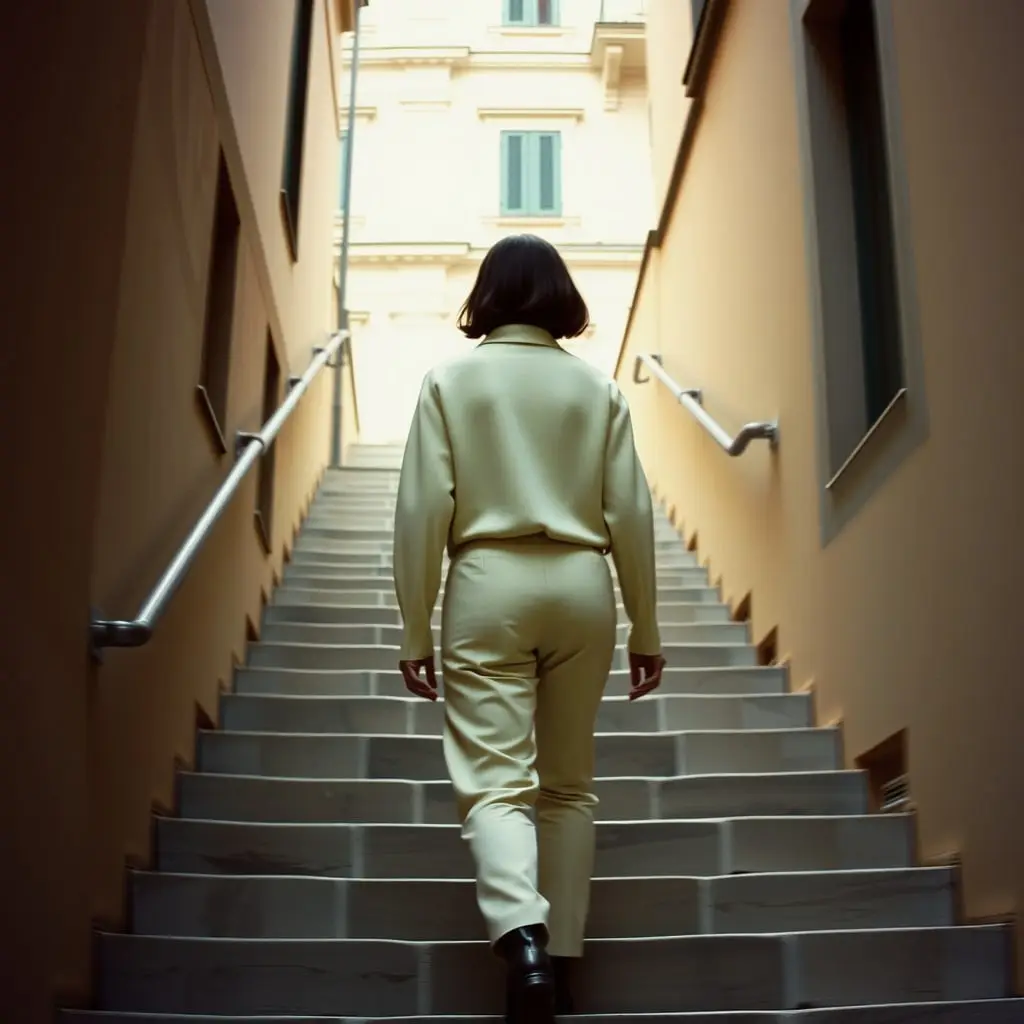
Quiet luxury is expensive clothing and accessories without visible logos, where the value lies in material, cut and craftsmanship rather than in brand recognition. It is sometimes called “stealth wealth”, and it signals status only to people who know what to look for.
The term entered mainstream fashion vocabulary in 2023, driven by the costume design of HBO’s Succession and by the Olsen twins’ label The Row. It has not gone away. In September 2026, Americans still searched Google for “quiet luxury” about 6,600 times a month, and for “quiet luxury brands” about 4,400 times. The brands at its centre — Loro Piana alone draws around 201,000 monthly searches — kept their pricing power while logo-led labels discounted.
In our own database of 40 quiet luxury brands, 30 put no visible branding on their products at all, and 7 are more than a century old.
Where did quiet luxury come from?
Restraint as a status signal is old. In 1899 the economist Thorstein Veblen described “conspicuous consumption”: spending to be seen spending. Quiet luxury is its opposite — what researchers sometimes call inconspicuous consumption, aimed at a small audience of insiders rather than everyone.
Fashion has cycled between the two for decades. The minimalism of Jil Sander, Helmut Lang and Calvin Klein in the 1990s gave way to the logo boom of the 2000s and the streetwear-driven monogram era of the 2010s. Around 2022, the pendulum swung back. Phoebe Philo’s years at Celine had already defined a minimalist template for a generation; Succession turned it into a cultural reference; and a period of economic anxiety made overt displays of wealth feel tone-deaf.
What does quiet luxury actually look like?
Quiet luxury is not a single style, but its pieces share five traits:
- No visible logos. Branding is inside the garment, or replaced by a design detail that only insiders recognise — Bottega Veneta’s woven leather, Valextra’s inked edges, the white sole of a Loro Piana Summer Walk.
- Exceptional materials. Baby cashmere, vicuña, double-faced wool, heavy silk, full-grain leather. The fabric does the talking.
- Precise fit. Trousers that break correctly, coats that sit on the shoulder, knitwear that holds its shape.
- A narrow, neutral palette. Camel, cream, grey, navy, chocolate and black, which makes pieces combine easily and age slowly.
- Longevity. Pieces designed to be worn for a decade rather than a season, which is also the strongest economic argument for paying more.
Which brands define quiet luxury?
The houses most often cited as the heart of quiet luxury are a short list, ranked here by tier and by our Quiet Luxury Index score:
Valextra
Valextra is a Milanese leather goods house founded in 1937 by Giovanni Fontana, known for logo-free bags with a signature black-lacquered edge, including the Iside.
The Row
The Row is a New York fashion house founded in 2006 by Mary-Kate and Ashley Olsen, known for logo-free, precisely cut clothing and leather goods that have become the reference point for quiet luxury.
Phoebe Philo
Phoebe Philo is the London-based label of designer Phoebe Philo, launched in 2023 after her influential tenure at Celine, selling limited editions of minimalist clothing and leather goods directly online.
Brioni
Brioni is a Roman menswear house founded in 1945 by tailor Nazareno Fonticoli and entrepreneur Gaetano Savini, known for handmade suits produced in Penne, Abruzzo.
Moynat
Moynat is a Parisian trunk-maker and leather goods house founded in 1849 by Pauline Moynat, revived in 2011, known for the Réjane bag and discreet craftsmanship.
Kiton
Kiton is a Neapolitan tailoring house founded in 1968 by Ciro Paone, known for soft-shouldered, extensively hand-sewn jackets and some of the most expensive ready-to-wear suits in the world.
For the full list, including accessible options at every price, see our guide to quiet luxury brands.
Is quiet luxury the same as old money?
They overlap but they are not the same. Old money describes a heritage aesthetic — navy blazers, cable knits, loafers, tennis whites — associated with inherited wealth. You can buy it at any price, and much of it (Ralph Lauren, for instance) is openly branded. Quiet luxury is defined by the quality and restraint of the objects themselves; it can look traditional, but it can equally look minimal, architectural or Japanese. We cover the heritage side in our guide to old money brands.
Why is quiet luxury so expensive?
Partly because the inputs are genuinely costly: a single vicuña sweater requires fibre from several animals that can be shorn only every few years, and hand-finished tailoring can take dozens of hours. Partly because restraint is itself a premium — a brand without a logo must justify its price through quality alone, so it tends to over-invest in materials. And partly, honestly, because scarcity and discretion are what the customer is paying for.
Can you dress quiet luxury on a budget?
Yes, if you separate the principles from the labels. Natural fibres, neutral colours, good tailoring and no logos are available at every price. Our guide to affordable quiet luxury brands covers the labels — COS, Arket, Quince, Uniqlo and others — that come closest without the summit price tag.
Is quiet luxury over?
The word peaked in 2023, and AI-assistant queries for it have cooled since early 2026. But the behaviour behind it has not reversed: the brands most associated with the look are still the ones customers pay full price for, and logo-free design has become a permanent option rather than a trend. Quiet luxury is better understood as a way of buying — fewer, better, unbranded — than as a season’s look.
Frequently asked questions
What is quiet luxury in simple terms?
Quiet luxury is high-quality clothing and accessories with no visible logos. The value is in the fabric, the cut and the craftsmanship rather than in a recognisable brand mark, so it reads as expensive only to people who know what to look for.
Is quiet luxury the same as old money style?
No. Old money style is a heritage aesthetic (blazers, loafers, cable knits, tennis whites) that can be bought at any price. Quiet luxury is about the quality and restraint of the pieces themselves, and it can look modern or minimal rather than traditional.
Which brands are considered quiet luxury?
The brands most associated with quiet luxury are The Row, Loro Piana, Brunello Cucinelli, Hermès, Max Mara, Khaite, Toteme, Jil Sander, Lemaire and Zegna. Accessible options include COS, Arket, Quince and Uniqlo.
Is quiet luxury still in style in 2026?
The term peaked in 2023, but the underlying preference for logo-free, well-made clothing has persisted. US Google searches for “quiet luxury” still ran at about 6,600 a month in September 2026, and the brands most associated with it continue to command full prices.
How can I dress quiet luxury on a budget?
Buy fewer, better pieces in natural fibres (wool, cashmere, linen, cotton), stick to a neutral palette, prioritise fit and tailoring, and avoid visible logos. Brands such as Uniqlo, COS, Arket and Quince sell logo-free basics in good fabrics at high-street prices.